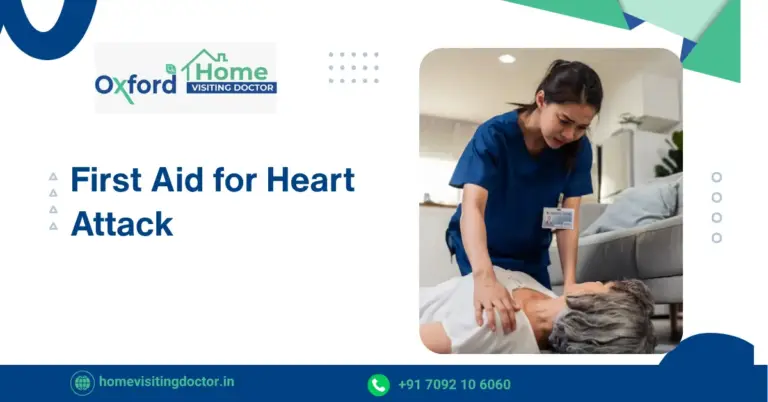
A heart attack is one of the most time-critical medical emergencies, yet it often begins in ways that are easy to dismiss. What may feel like mild discomfort, fatigue, or breathlessness can actually be the early phase of a life-threatening blockage in the heart’s blood supply. Understanding First Aid for Heart Attack can help people recognize warning signs and respond quickly during this critical situation.
The real danger lies not only in the condition itself but in delayed recognition. Heart muscle begins to die within minutes of oxygen deprivation, which means every moment before action directly influences survival and long-term heart function.
This guide provides a deeper, structured understanding of what happens during a heart attack and how immediate first aid can stabilize a person until advanced medical care takes over.
Understanding a Heart Attack: What Is Really Happening Inside the Heart
A heart attack (myocardial infarction) occurs when blood flow through one or more coronary arteries is suddenly reduced or completely blocked. These arteries supply oxygen-rich blood to the heart muscle, which must work continuously to pump blood throughout the body. Knowing the importance of First Aid for Heart Attack can help provide timely support and improve outcomes during this medical emergency.
In most cases, the blockage occurs when a fatty plaque inside a coronary artery ruptures. The body responds by forming a blood clot at the site of the rupture. If the clot partially or completely blocks the artery, oxygen-rich blood can no longer reach the affected area of the heart muscle.
Without an adequate oxygen supply:
- Heart muscle cells begin to sustain damage within minutes.
- The heart’s normal electrical activity may become unstable, increasing the risk of dangerous arrhythmias.
- If blood flow is not restored promptly, irreversible heart muscle damage can occur and may progress to cardiac arrest, where the heart stops pumping blood effectively.
Early recognition and immediate medical treatment, along with timely access to appropriate medical equipment and consumables, are essential to restore blood flow, preserve heart muscle, and improve survival.
Early Warning Signs: The Body’s Subtle but Critical Alarm System
Understanding Early warning signs of Heart attack is an essential part of first aid for heart attack. Heart attack symptoms do not always begin as sudden, severe chest pain. In many cases, the body may show warning signs that are mild, irregular, or mistaken for acidity, fatigue, stress, or muscle pain. These Early warning signs of Heart attack can appear differently from person to person, making it important to identify changes in the body and take them seriously. Recognizing these symptoms early as part of first aid for heart attack can help a person seek emergency medical care quickly, allowing treatment to begin before the heart muscle suffers serious damage.
- Chest-related discomfort : Rather than sharp pain, many patients experience a sensation of pressure, tightness, heaviness, or squeezing in the chest. This discomfort may come and go initially, gradually becoming more persistent as the blockage worsens. It often worsens with physical activity and improves only partially with rest.
- Pain radiating beyond the chest : Heart-related pain is not always confined to the chest. It may spread to the left arm, both arms, jaw, neck, shoulders, or upper back. This happens because the heart and these areas share interconnected nerve pathways, causing the brain to misinterpret the source of pain.
- Breathing difficulty and oxygen stress response: Shortness of breath may appear even without exertion. The person may feel unable to take a deep breath or experience a sensation of suffocation. This occurs because the heart is no longer pumping efficiently, reducing oxygen delivery to the body.
- Sudden autonomic and circulation changes: The body may respond to cardiac stress by triggering the autonomic nervous system. This results in cold sweating, pale or clammy skin, nausea, or vomiting. These signs indicate the body is under acute physiological stress, even if chest pain is mild.
- Non-classical symptoms : Some individuals, particularly women, elderly patients, and people with diabetes, may not experience strong chest pain at all. Instead, they may report unusual fatigue, mild indigestion-like discomfort, anxiety, or a sense of unexplained weakness lasting hours or days.
If someone has possible heart attack symptoms, including Early warning signs of Heart attack, call local emergency services immediately rather than waiting to see if the symptoms pass.
First Aid for Heart Attack: A Deep Clinical Response Framework
When a heart attack is suspected, first aid for heart attack focuses on taking immediate, safe actions rather than trying to confirm the diagnosis at home. The person should be kept calm, seated, or resting comfortably, and monitored closely for any changes in breathing, responsiveness, or consciousness.
Emergency services should be contacted immediately so trained medical professionals can begin care and arrange rapid transport. Avoid delays, self-driving, or waiting for symptoms to improve, as every minute matters. Early medical treatment, supported by appropriate medical equipment and consumables, can help restore blood flow, limit heart damage, and improve survival outcomes.
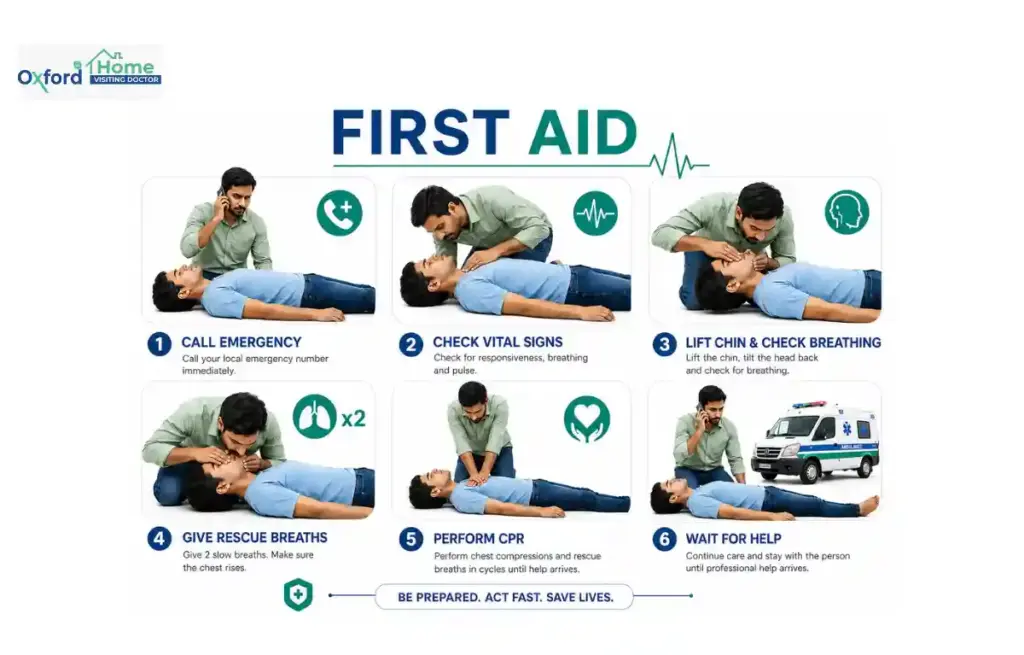
Six Critical Steps That Can Save a Life
1. Activate Emergency Medical Services Immediately
The first and most important step in first aid for heart attack is to call emergency medical services without delay. Do this even if the symptoms seem mild or you are unsure whether it is a heart attack. Early medical intervention significantly improves the chances of survival and helps reduce the risk of severe heart damage.
Calling emergency services ensures:
- Rapid dispatch of trained medical responders
- Early initiation of life-saving treatment protocols
- Continuous monitoring and care during transport
- Faster access to definitive treatment, reducing heart muscle damage
Even a short delay can increase the extent of permanent heart injury.
2. Position the Person to Reduce Cardiac Workload
Help the person into a comfortable semi-upright sitting position with back support and slightly bent or elevated knees. This position reduces the workload on the heart and makes breathing easier.
Benefits include:
- Reduced strain on the heart
- Improved lung expansion and breathing efficiency
- Lower oxygen demand associated with anxiety and discomfort
Avoid laying the person flat unless they become unconscious.
3. Keep the Person Calm and Reassured
Fear and panic trigger the release of stress hormones such as adrenaline, increasing heart rate and oxygen demand. During a heart attack, this added strain can place further stress on the heart muscle. As part of first aid for heart attack, calm reassurance and a stable environment help reduce stress and support the person until emergency medical care arrives.
Provide calm reassurance by:
- Speaking in a steady, reassuring voice
- Encouraging the person to remain as still as possible
- Reducing noise and unnecessary activity around them
Maintaining a calm environment can help reduce physiological stress.
4. Give Aspirin Only If It Is Safe
If the person is conscious, able to swallow, and has no known allergy or medical reason to avoid aspirin, a dose of aspirin may help limit clot progression while waiting for emergency care.
Aspirin helps by:
- Reducing platelet aggregation
- Slowing clot enlargement
- Supporting blood flow through partially blocked arteries
Do not force aspirin if swallowing is difficult or the person has reduced consciousness.
5. Monitor the Person Continuously
Stay with the person and monitor them continuously until emergency responders arrive. Watch for any changes in breathing, consciousness, or responsiveness, as their condition can deteriorate quickly and require immediate intervention.
Watch for:
- Difficulty breathing or gasping
- Sudden loss of consciousness
- Weak, irregular, or absent pulse
- Worsening chest pain or sudden collapse
Recognizing these changes promptly allows immediate action if cardiac arrest occurs.
6. Begin CPR Immediately If the Person Stops Responding
If the person becomes unresponsive and is not breathing normally, begin hands-only CPR immediately to maintain blood flow until emergency medical professionals arrive and take over care.
Perform CPR by:
- Placing both hands in the center of the chest
- Compressing at least 5 cm (2 inches) deep
- Maintaining a rate of 100–120 compressions per minute
- Allowing the chest to fully recoil after each compression
- Continuing uninterrupted until emergency medical personnel take over or the person shows signs of life
CPR is a critical component of first aid for heart attack when a person becomes unresponsive and is not breathing normally. CPR does not restart the heart; instead, it manually circulates blood to the brain and other vital organs when the heart has stopped pumping effectively. By maintaining oxygen delivery, CPR helps reduce organ damage and significantly improves the chances of survival until emergency responders can provide advanced life-saving treatment.
What NOT to Do During a Heart Attack (Critical Mistakes That Worsen Outcomes)
| Action | Why It Is Harmful |
| Waiting for confirmation of symptoms | Heart damage continues silently even during uncertainty |
| Driving the patient to hospital | Delays emergency treatment and risks collapse during transit |
| Giving food or water | Increases risk of choking and complicates emergency procedures |
| Allowing unnecessary movement | Increases oxygen demand on already stressed heart |
| Ignoring mild or atypical symptoms | Leads to delayed diagnosis and worse outcomes |
| Panicking or overcrowding the patient | Increases stress and worsens physiological instability |
Did You Know?
- The highest risk of fatality occurs within the first 60 minutes of symptom onset
- Many patients experience warning signs hours or even days before the actual attack
- Immediate CPR by bystanders can significantly improve survival outcomes
- Silent heart attacks are more common in diabetic patients due to nerve-related pain masking
Why Time-to-Action Matters More Than Treatment Itself
Medical evidence shows that rapid action is one of the strongest factors influencing survival during a heart attack. As a key part of first aid for heart attack, recognizing symptoms, calling emergency services immediately, and starting appropriate early care can make a significant difference. The sooner emergency treatment begins, the greater the chance of restoring blood flow and limiting permanent heart muscle damage.
Advanced hospitals and modern treatments are valuable, but their benefits decrease when care is delayed. Effective first aid for heart attack helps ensure timely medical attention, reduce complications, improve survival chances, and support a stronger recovery.
Doctors emphasize these three priorities because every minute matters during a suspected heart attack or cardiac arrest:
- Rapid initiation of CPR if required: If a person becomes unconscious and is not breathing normally, CPR should be started immediately while emergency help is on the way. Chest compressions help maintain blood flow to the brain and other vital organs until advanced medical care or a defibrillator is available.
- Early recognition of symptoms: Identifying warning signs quickly can prevent dangerous delays. Symptoms may include chest pain or pressure, pain spreading to the arm, shoulder, jaw, or back, shortness of breath, sweating, nausea, dizziness, or unusual fatigue. Recognizing these signs early allows the person to seek medical help before the condition worsens.
- Immediate emergency activation: Calling emergency services right away ensures that trained medical professionals can begin care as soon as possible. Ambulance teams can monitor the patient, provide oxygen or other emergency treatment when appropriate, and transport them safely to a hospital. Waiting or attempting to travel without emergency support can delay life-saving treatment.
Modern cardiac care plays a vital role in saving lives and preserving heart function, but its effectiveness depends on receiving treatment quickly. Learning about First Aid for Heart Attack can help ensure immediate action is taken before prolonged blood flow loss leads to permanent heart muscle damage.
Conclusion
A heart attack is more than a medical diagnosis; it is a time-sensitive emergency in which every minute can affect the outcome. When blood flow to the heart is blocked, heart muscle begins to lose oxygen and may suffer permanent damage. Awareness, prompt action, and calm decision-making can make a meaningful difference in survival and recovery.Recognizing warning signs such as chest pressure, breathlessness, sweating, nausea, dizziness, or pain spreading to the arm, jaw, neck, or back is essential. These symptoms should never be ignored, delayed, or dismissed as acidity, stress, or fatigue. Calling emergency services immediately can ensure faster medical support and safer transport to the hospital.
Responding quickly is not only the responsibility of healthcare professionals. As part of first aid for heart attack, family members, friends, colleagues, and bystanders can play a life-saving role by recognizing the warning signs, calling emergency medical services immediately, and starting CPR if the person becomes unresponsive and is not breathing normally. In a heart emergency, timely action can make the difference between life and death.